
Combating child physical inactivity - Promoting play for the whole family
Active parents raise active kids—and moving together strengthens both health and family bonds.

Sedentary behavior— for example, spending too much time sitting—is becoming a serious public health concern, both globally and here in the U.S. Right now, only about 1 in 4 kids aged 6 to 17 meet the physical activity guidelines recommended by the U.S. Department of Health and Human Services. That means most kids aren’t moving enough each day to stay healthy.
And it’s not just about physical fitness. Too much sitting is linked to real health problems like obesity, high blood pressure, high cholesterol, type 2 diabetes, asthma, sleep apnea, and joint pain. It can also take a toll on emotional well-being—leading to increased bullying, social isolation, low self-esteem, and an overall lower quality of life (Esposito et al., 2014; Skinner & Skelton, 2014; WHO, 2020).
Unfortunately, these health risks hit some families harder than others. When parents are already stretched thin by the cost of housing, food, and basic necessities, managing chronic conditions like diabetes or asthma can feel overwhelming. Without consistent access to healthcare, these conditions can quickly become life-threatening (Hammond & Levine, 2009).
But here’s the good news: physical activity really helps. Kids who stay active are more likely to have healthier weights, better grades, stronger friendships, and fewer mental health challenges (Hills et al., 2011; Wyszyńska et al., 2020). Even small bursts of movement throughout the day—like dancing, walking, or playing outside—can lead to big benefits.
So what’s getting in the way? The environment and daily habits both play a big role. Some communities don’t have safe parks or schools with enough resources to support active programs. And with today’s easy access to screens, it’s no surprise kids are spending more time sitting and less time moving. This is especially true in rural or underserved areas, where opportunities for safe, active play may be limited (Gordon-Larsen et al, 2006; Drenowatz et al, 2010; Sallis et al., 2012). Family structure matters, too—research shows that children in single-parent or blended families may be at higher risk for being sedentary (Langøy et al., 2019).
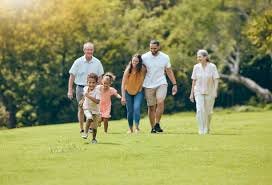
One of the most powerful influences on a child’s activity level is you(Petersen et al, 2020). When parents stay active, their kids are much more likely to follow their lead. Simple, fun routines—like an evening walk, a quick stretch break, or even a living room dance party—don’t just get everyone moving, but they help build healthy habits that can last a lifetime.
Even better, being active together can strengthen family bonds. Research shows that families who engage in regular physical activity together often feel more connected, and that sense of togetherness can boost the emotional and physical benefits of staying active (Li et al., 2024). It’s a win-win: more movement and more meaningful time as a family.
Reference list
Drenowatz, C., Eisenmann, J.C., Pfeiffer, K.A. et al. Influence of socio-economic status on habitual physical activity and sedentary behavior in 8- to 11-year old children. BMC Public Health 10, 214 (2010). https://doi.org/10.1186/1471-2458-10-214
Esposito, M., Gallai, B., Roccella, M., Marotta, R., Lavano, F., Lavano, S. M., Mazzotta, G., Bove, D., Sorrentino, M., Precenzano, F., & Carotenuto, M. (2014). Anxiety and depression levels in prepubertal obese children: a case-control study. Neuropsychiatric disease and treatment, 10, 1897–1902. https://doi.org/10.2147/NDT.S69795
Gordon-Larsen P, Nelson MC, Page P, Popkin BM. Inequality in the built environment underlies key health disparities in physical activity and obesity. Pediatrics. 2006; 117; 2: 417-424. 10.1542/peds.2005-005
Hammond, R. A., & Levine, R. (2009). The economic impact of obesity in the United States. Diabetes, Metabolic Syndrome and Obesity: Targets and Therapy, 3, 285-295. https://doi.org/10.2147/DMSOTT.S7384
Hills, A., Andersen, L., Byrne, N. (2011). Physical Activity and Obesity. British Journal of Sports Medicine. https://doi.org/10.1136/bjsports-2011-090199
Langøy, A., Smith, O. R. F., Wold, B., Samdal, O., & Haug, E. M. (2019). Associations between family structure and young people's physical activity and screen time behaviors. BMC public health, 19(1), 433. https://doi-org.oregonstate.idm.oclc.org/10.1186/s12889-019-6740-2
Li, Z., Mirzaei, F., & Jeon, H. S. (2024). Exercise Individually or as a Collective Family Activity?A Semi-Experimental Comparison on the Increase in Subjective Vitality and Happiness. Journal of multidisciplinary healthcare, 17, 6229–6239. https://doi-org.oregonstate.idm.oclc.org/10.2147/JMDH.S493261
Petersen, T.L., Møller, L.B., Brønd, J.C. et al. Association between parent and child physical activity: a systematic review. Int J Behav Nutr Phys Act 17, 67 (2020). https://doi.org/10.1186/s12966-020-00966-z
Sallis, J. F., Floyd, M. F., Rodríguez, D. A., & Saelens, B. E. (2012). Role of built environments in physical activity, obesity, and cardiovascular disease. Circulation, 125(5), 729–737. https://doi-org.oregonstate.idm.oclc.org/10.1161/CIRCULATIONAHA.110.969022
Skinner, A. C., & Skelton, J. A. (2014). Prevalence and trends in obesity and severe obesity among children in the United States, 1999-2012. JAMA pediatrics, 168(6), 561–566. https://doi-org.oregonstate.idm.oclc.org/10.1001/jamapediatrics.2014.21
van Ekris, E., Altenburg, T. M., Singh, A. S., Proper, K. I., Heymans, M. W., & Chinapaw, M. J. (2016). An evidence-update on the prospective relationship between childhood sedentary behaviour and biomedical health indicators: a systematic review and meta-analysis. Obesity reviews : an official journal of the International Association for the Study of Obesity, 17(9), 833–849. https://doi-org.oregonstate.idm.oclc.org/10.1111/obr.12426
Wu XY, Han LH, Zhang JH, Luo S, Hu JW, et al. (2017) The influence of physical activity, sedentary behavior on health-related quality of life among the general population of children and adolescents: A systematic review. PLOS ONE 12(11): e0187668. https://doi.org/10.1371/journal.pone.0187668
Wyszyńska, J., Thivel, D., Weghuber, D., Hadjipanayis, A., Grossman, Z., Dereń, K., & Mazur, A. (2019). Physical activity in the prevention of childhood obesity: The position of the European Childhood Obesity Group and the European Academy of Pediatrics. Frontiers in Pediatrics. https://doi.org/10.3389/fped.2020.535705
Hi Michael! I thought that you did a great job of clearly explaining the wide-ranging impacts of sedentary behavior on children's health, and I really appreciate how you tied in the role of family and environment. One suggestion might be to include a specific example or success story of a family getting active together where it could make the message even more relatable and actionable. Overall, I thought it was informative and encouraging!